National Park Service started from here
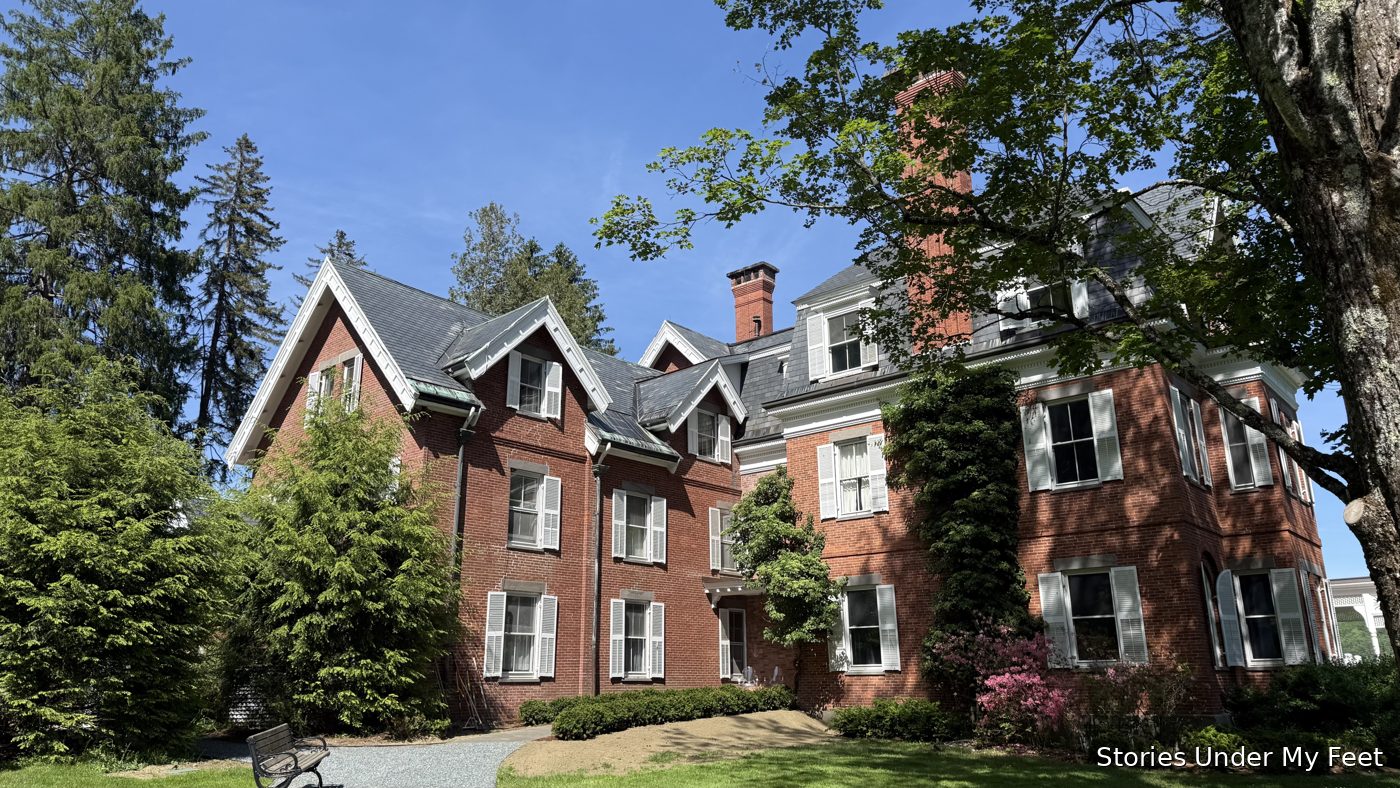
Marsh-Billings-Rockefeller National Historical Park — I walked in thinking this would be John D. Rockefeller Sr.'s story, the oil-fortune Rockefeller. It isn't. It's the story of three families and one idea, and it's the idea that stayed with me the whole visit: nature is not an unlimited resource. Humans have a responsibility to use it wisely and give it back — and to give it back, we first have to understand how nature's own systems work.
The thread starts with George Perkins Marsh, born on this land in 1801. Like his father — Charles Marsh, a lawyer and congressman — he was trained in law, not the sciences; he came to understand nature simply by watching it closely. And he grew up watching it vanish. Vermont's Merino-sheep craze was clearing the state for pasture — sheep want open grass, not forest — and by around 1840 there were well over a million sheep here (some counts put the peak near 1.7 million). As a staffer there put it, Vermont went from about 80% forest cover down to roughly 20% — the wooded hills stripped nearly bare. Marsh saw that ruin at home, then saw worse abroad: posted as U.S. Minister to the Ottoman Empire and living in Constantinople — today's Istanbul — he watched how centuries of clearing had turned the once-green Mediterranean to bare rock. He put it into Man and Nature (1864), a founding text of American conservation and, in plain terms, the argument behind that whole idea: people can wreck the very systems they depend on if they never bother to learn how those systems work.
Frederick Billings set out to prove the hopeful half of Marsh's argument — that ruined land can be healed. He had made a fortune as San Francisco's first land-claims lawyer and later ran the Northern Pacific Railroad, and he knew nothing about farming or forestry; but in 1869 he bought this estate precisely because it had been Marsh's boyhood home, arriving to the same worn-out, over-grazed hills the sheep boom had left behind once it busted. He reforested them by the hundreds of thousands of trees and ran the place as a model, scientifically managed farm. He was also a famously generous man, giving much of his fortune to schools, churches, and libraries.
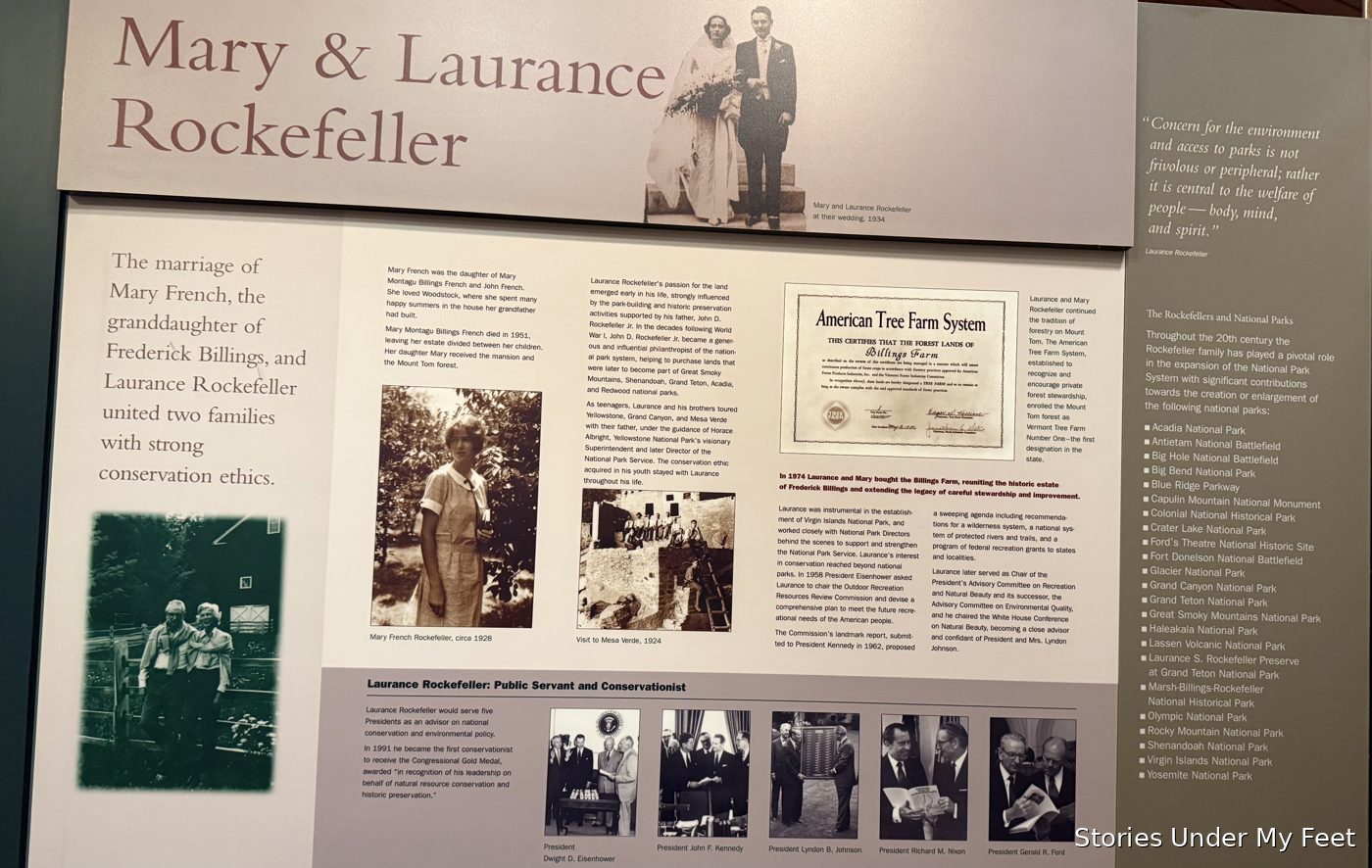
The third family arrived when Billings's granddaughter, Mary French, married Laurance Rockefeller — grandson of the oil magnate, and to my surprise a much softer, more open-minded man than the Rockefeller name suggests. He came to know this land and its farm through Mary and the Billings family, and it turned him into one of the great conservation philanthropists. Over his life he helped establish or enlarge more than twenty national parks and park units — among them Grand Teton and the Jackson Hole country in Wyoming (the family's signature project, not Yellowstone, which I'd half-assumed), the Virgin Islands, and Redwood — and in 1991 he received the Congressional Gold Medal, the first ever awarded for conservation. In 1992 he and Mary gave this estate to the nation, and it became the first national park devoted to the history of land stewardship itself. It even landed on a 2020 U.S. quarter. Standing on the porch, you understand why they wanted it kept: the view really is beautiful.
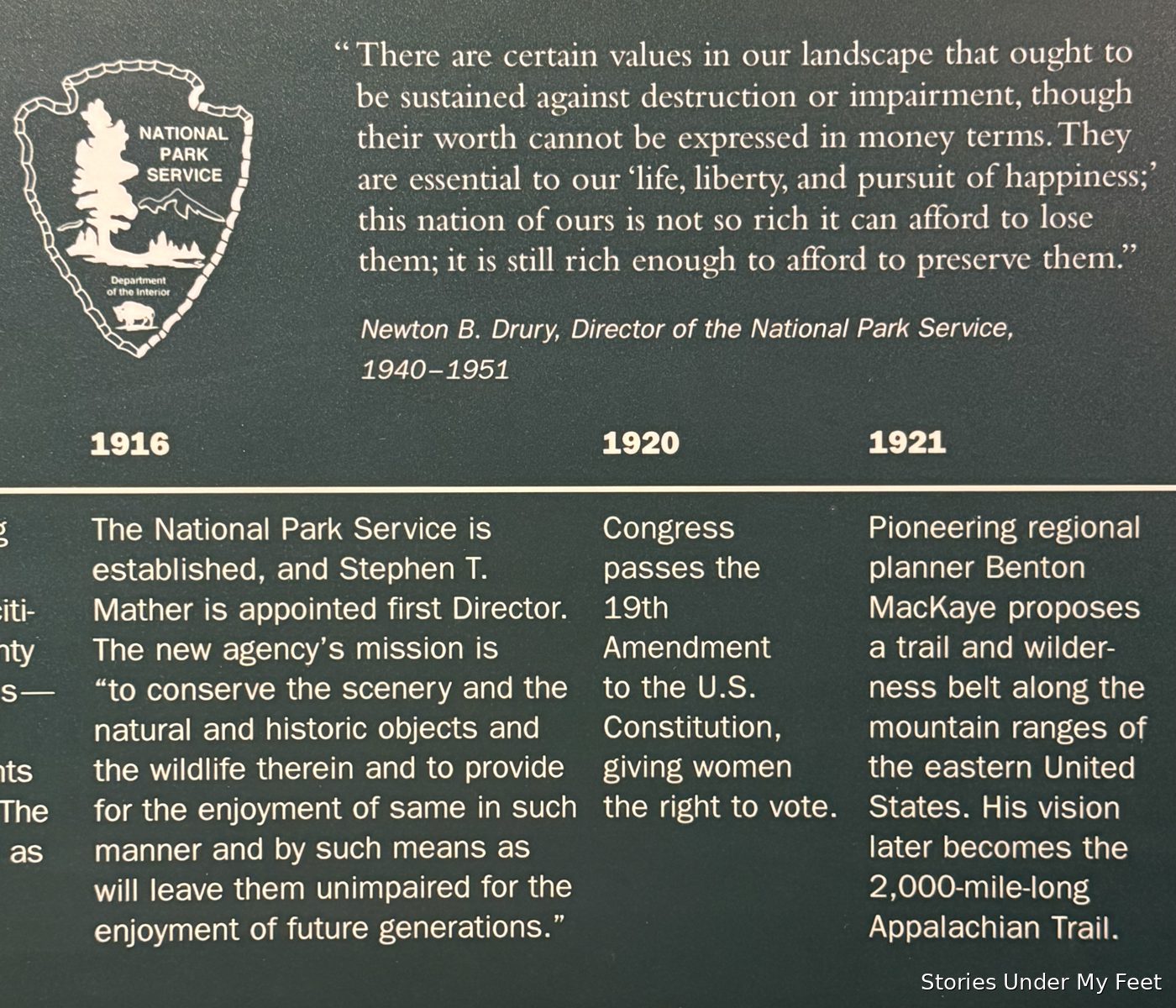
What began on this one hillside kept rippling outward. Marsh's book helped seed a national conservation movement: in 1903 Theodore Roosevelt created the country's first federal wildlife refuge, and in 1916 Congress established the National Park System to protect places like this for good — the very system this estate would one day join.
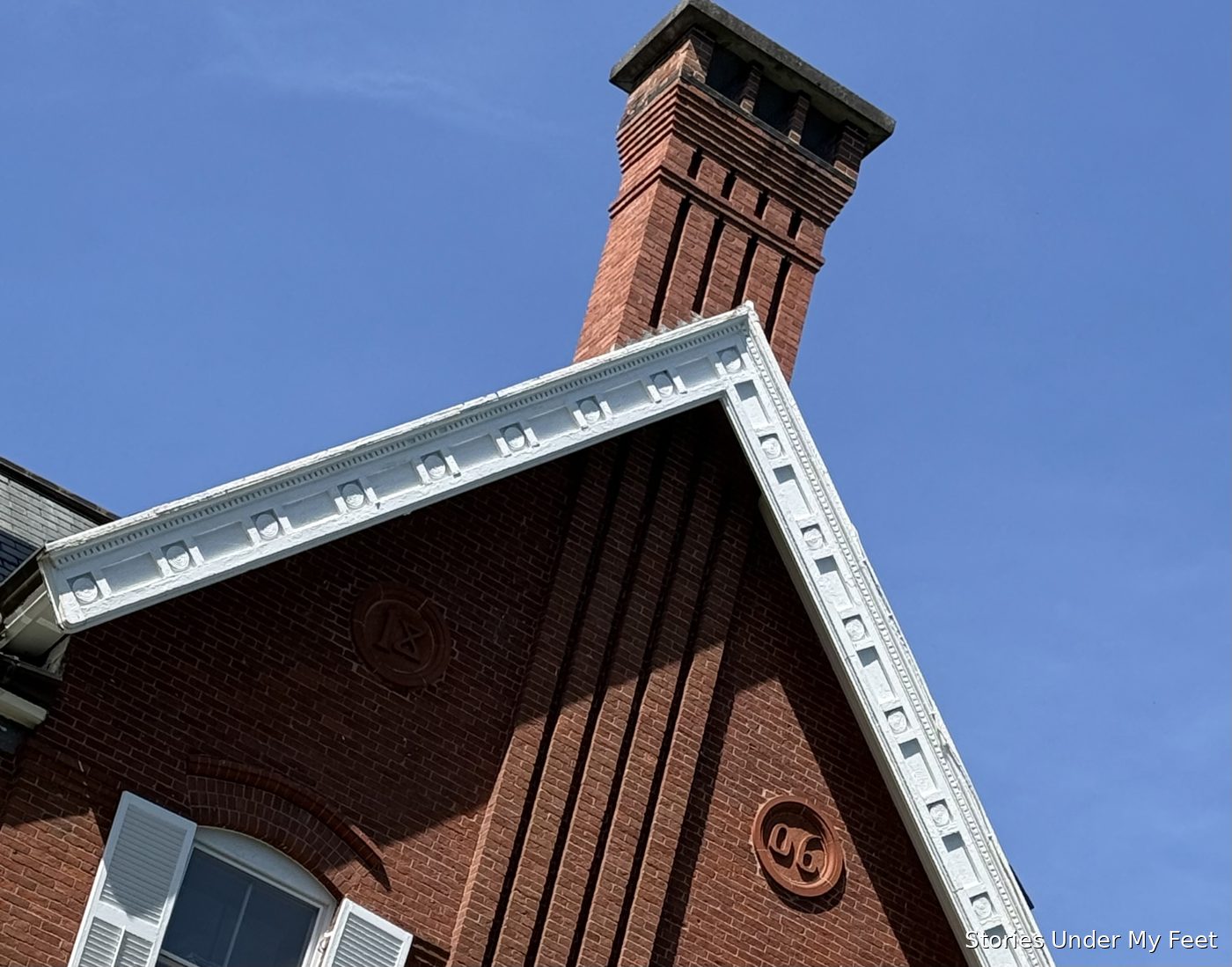
The brick mansion tells the same story of care compounding over generations. Charles Marsh built the original Federal house around 1805 — there's an "1806" worked high into the gable — and it was remodeled and enlarged three times as the families and their fortunes grew: into a Stick Style villa in 1869, then a full Queen Anne mansion in 1885, before the Rockefellers added their own updates. It kept getting bigger and grander with each family.
The best part of the visit wasn't planned at all: a long conversation with a park volunteer that drifted from urban design in New York, Boston, and LA all the way to Singapore's decades of deliberate planning — Lee Kuan Yew's vision, Liu Thai Ker's execution, and the self-sufficient neighborhood "hubs" they built. Different subject, same lesson as Marsh's: understand the system, and you can shape it to give back more than it takes.