National Parks
National Park Stamps
I've run into a lot of clever ideas on the road, but the national park passport might be my favorite. I do appreciate the National Park Service itself — its founders, its ideas, the whole system built up since 1916. But the part that truly gets me is the tiny passport book and its free ink stamps.
Here's why it's genius: the stamp is the bait. You drive out to a park mostly to collect the cancellation — often with no real knowledge of the place and no expectations at all. But to get it, you have to walk up to the ranger's desk, and by the time you leave you've learned something you never went looking for. A little rubber stamp quietly turns "we stopped for gas" into "we stopped and I learned something." No entry fee, no prize for filling the book — the only reward is the visit itself, and the accidental education that comes with it. (The passport is a separate, later idea from the parks: a nonprofit partner, Eastern National, started it in 1986.) What a great idea.
✶ stamped · ✉ pending by mail (8) · 34 states so far · tap a card to open its story
North Atlantic17 / 47
✶ Acadia National Park63Est. 1919
MaineThe first national park east of the Mississippi, assembled almost entirely from land donated by private citizens.
✶ Adams National Historical Park250Est. 1946
The homes of two presidents — John and John Quincy Adams — and four generations of one remarkable family.
✶Boston African American National Historic Site250Est. 1980
Preserves the Beacon Hill community and the African Meeting House at the center of Boston's Black abolitionism.
✶Boston Harbor Islands National Recreation AreaEst. 1996
MassachusettsA constellation of islands and peninsulas in Boston Harbor — a Civil War fort, lighthouses, and tide pools a ferry ride from downtown.
✶Boston National Historical Park250Est. 1974
Ties together the Freedom Trail — Faneuil Hall, Old North Church, Bunker Hill, and the USS Constitution.
✶Cape Cod National SeashoreEst. 1961
Forty miles of protected Atlantic shore, set aside with the help of native son President Kennedy.
✶John Fitzgerald Kennedy National Historic SiteEst. 1967
The Brookline house where JFK was born and spent his early childhood.
✶Longfellow House–Washington's Headquarters National Historic Site250Est. 1972
Washington's 1775–76 headquarters during the Siege of Boston, later the home of the poet Henry Wadsworth Longfellow.
✶Lowell National Historical ParkEst. 1978
MassachusettsPreserves the canals and brick mills of America's first large-scale planned industrial city, where the textile revolution took hold.
✶Minute Man National Historical Park250Est. 1959
The Lexington–Concord road where the Revolution's first shots — "the shot heard round the world" — rang out on April 19, 1775.
✶Salem Maritime National Historic Site250Est. 1938
The first National Historic Site ever designated, preserving the wharves of early American sea trade; Hawthorne worked in its Custom House.
✶Springfield Armory National Historic Site250Est. 1974
MassachusettsThe first federal armory, birthplace of the interchangeable-parts manufacturing that powered the American Industrial Revolution.
✶ Saint-Gaudens National Historical ParkEst. 1964
New HampshireThe home, studios, and gardens of Augustus Saint-Gaudens, the leading American sculptor of the Gilded Age.
✶ Saratoga National Historical Park250Est. 1938
The 1777 American victory that convinced France to join the war — widely called the turning point of the Revolution.
✶ Blackstone River Valley National Historical ParkEst. 1986
The "birthplace of the American Industrial Revolution," where Slater Mill launched U.S. textile manufacturing.
✶Roger Williams National MemorialEst. 1965
Honors the founder of Providence and Rhode Island, a pioneer of religious liberty and the separation of church and state.
✶ Marsh–Billings–Rockefeller National Historical ParkEst. 1998
The only national park devoted to conservation history — three families and the idea of stewarding the land.
 Coltsville NHPWeir Farm NHPFrances Perkins NMKatahdin Woods & Waters NMSaint Croix Island IHSFrederick Law Olmsted NHSNew Bedford Whaling NHPSaugus Iron Works NHSAfrican Burial Ground NM250Castle Clinton NMEleanor Roosevelt NHSFederal Hall N MEM250Fire Island NS250Fort Stanwix NM250Gateway NRA250General Grant N MEMGovernors Island NMHamilton Grange N MEM250Harriet Tubman NHPHome of Franklin D. Roosevelt NHSMartin Van Buren NHSSagamore Hill NHSSaint Paul's Church NHS250Statue of Liberty NM & Ellis Island250Stonewall NMTheodore Roosevelt Birthplace NHSTheodore Roosevelt Inaugural NHSUpper Delaware Scenic & Rec RiverVanderbilt Mansion NHSWomen's Rights NHP
Mid-Atlantic24 / 52
✶ C&O Canal National Historical ParkEst. 1971
MarylandA 184-mile towpath preserving the canal that once carried coal and goods along the Potomac River.
✶Fort McHenry National Monument and Historic ShrineEst. 1925
The 1814 defense that moved Francis Scott Key to write "The Star-Spangled Banner" — the only site ranked a national monument and historic shrine.
✶Hampton National Historic SiteEst. 1948
MarylandOnce one of the largest houses in America — a Georgian mansion whose grandeur was built on enslaved and indentured labor.
✶Harriet Tubman Underground Railroad National Historical ParkEst. 2013
MarylandThe Eastern Shore landscape where Tubman was born, escaped slavery, and returned again and again to lead others to freedom.
✶Thomas Stone National Historic Site250Est. 1978
Home of a Maryland signer of the Declaration of Independence.
✶ Benjamin Franklin National MemorialEst. 1938
The nation's official memorial to Franklin, seated beneath the dome of Philadelphia's Franklin Institute.
✶Edgar Allan Poe National Historic SiteEst. 1980
The Philadelphia home Poe kept during his most productive years.
✶Hopewell Furnace National Historic Site250Est. 1938
PennsylvaniaA restored 19th-century iron-making village showing how early American industry and rural life fit together.
✶Independence National Historical Park250Est. 1948
"America's most historic square mile" — Independence Hall and the Liberty Bell, where the Declaration and the Constitution were signed.
✶Thaddeus Kosciuszko National Memorial250Est. 1972
The smallest unit in the entire system, honoring the Polish engineer who fortified Saratoga and West Point for the Revolution.
✶ Arlington House, The Robert E. Lee MemorialEst. 1955
VirginiaThe hilltop mansion above Arlington Cemetery — and the story of the enslaved people who lived there before it became a memorial.
✶Colonial National Historical Park250Est. 1930
VirginiaLinks Jamestown, the first permanent English colony, with Yorktown, where the Revolution was decisively won.
✶Fredericksburg and Spotsylvania National Military ParkEst. 1927
VirginiaPreserves four major Civil War battlefields — some of the deadliest ground of the entire war.
✶George Washington Birthplace National Monument250Est. 1930
Marks the Popes Creek plantation where Washington was born in 1732.
✶George Washington Memorial ParkwayEst. 1930
A landscaped parkway preserving the Potomac shoreline and Washington's memory from Mount Vernon to the capital.
✶Great Falls ParkEst. 1966
VirginiaWhere the Potomac drops in roaring falls and rushes through Mather Gorge, minutes from Washington.
✶Historic Jamestowne
VirginiaThe site of the first permanent English settlement in America, founded 1607 — it carries its own passport stamp, separate from Colonial NHP.
✶Maggie L. Walker National Historic SiteEst. 1978
Home of the first Black woman to charter a bank in the United States — a civil-rights and business pioneer.
✶Prince William Forest Park250Est. 1936
VirginiaThe largest protected piedmont forest in the region — once a Depression-era recreation camp and a WWII spy-training site.
✶Shenandoah National Park63Est. 1935
VirginiaWorn Blue Ridge farmland restored to forest, threaded by Skyline Drive along the mountain crest.
✶ Bluestone National Scenic RiverEst. 1988
West VirginiaA protected free-flowing river cutting a deep, wild gorge through the Appalachians.
✶Gauley River National Recreation AreaEst. 1988
West VirginiaProtects one of the world's premier whitewater rivers, released each autumn from Summersville Dam.
✶Harpers Ferry National Historical ParkEst. 1944
Where John Brown's 1859 raid helped ignite the Civil War, at the dramatic meeting of two rivers and three states.
✶New River Gorge National Park and Preserve63Est. 1978
West VirginiaRedesignated the nation's newest national park in 2020, protecting one of the oldest rivers on the continent and its rugged gorge.
✉ First State National Historical Park250Est. 2013stamp pending
DelawareDelaware's first national park unit, telling the story of the first state to ratify the U.S. Constitution.
Antietam NBAssateague Island NSCatoctin Mountain ParkMonocacy NBPiscataway Park Delaware Water Gap NRAMorristown NHP250Paterson Great Falls NHP250Thomas Edison NHPAllegheny Portage Railroad NHSCarlisle Federal Indian Boarding School NMEisenhower NHSFlight 93 N MEMFort Necessity NB250Friendship Hill NHSGettysburg NMPJohnstown Flood N MEMSteamtown NHSValley Forge NHP250Appomattox Court House NHPBooker T. Washington NMCedar Creek & Belle Grove NHPFort Monroe NMManassas NBPPetersburg NBRichmond NBPWolf Trap NP for the Performing Arts
National Capital10 / 28
✶ Constitution Gardens250Est. 1976
District of ColumbiaA quiet lakeside park on the Mall, with a memorial to the 56 signers of the Declaration of Independence.
✶Ford's Theatre National Historic SiteEst. 1970
The theater where Lincoln was shot on April 14, 1865 — still an active, working theater today, alongside the museum and the house across the street where he died.
✶Franklin Delano Roosevelt MemorialEst. 1997
Four outdoor "rooms" of granite and waterfalls tracing FDR's four terms through the Depression and World War II.
✶Korean War Veterans MemorialEst. 1995
District of ColumbiaNineteen steel soldiers on patrol honor those who served in "the Forgotten War."
✶Lincoln MemorialEst. 1922
The marble temple to the sixteenth president — backdrop to Dr. King's "I Have a Dream" speech.
✶Martin Luther King, Jr. MemorialEst. 2011
A figure emerging from a "Stone of Hope" — the first memorial on the Mall to a Black American and a man of peace.
✶National Mall and Memorial ParksEst. 1965
District of Columbia"America's front yard" — the Lincoln, Washington, and war memorials at the symbolic heart of the nation.
✶President's Park (White House)Est. 1961
District of ColumbiaThe White House and its grounds — home to every U.S. president since John Adams.
✶Vietnam Veterans MemorialEst. 1982
District of ColumbiaMaya Lin's black granite wall, inscribed with more than 58,000 names — a place of reflection and mourning.
✶World War II MemorialEst. 2004
District of ColumbiaHonors the 16 million who served in the Second World War, at the center of the National Mall.
✉Old Post Officestamp pending
District of ColumbiaA landmark clock-tower building on Pennsylvania Avenue, saved from demolition and kept in public hands by the Park Service.
✉Thomas Jefferson Memorial250stamp pending
District of Columbia · Washington, D.C.Honors the author of the Declaration of Independence and the nation's third president, on the Tidal Basin among the cherry trees.
✉Washington Monument250stamp pending
District of Columbia · Washington, D.C.The marble obelisk honoring the first president — for decades the tallest structure in the world.
Anacostia ParkBelmont-Paul Women's Equality NMCarter G. Woodson Home NHSDwight D. Eisenhower MemorialFrederick Douglass NHSMary McLeod Bethune Council House NHSNational Capital Parks-EastPennsylvania Avenue NHSRock Creek ParkTheodore Roosevelt IslandClara Barton NHSFort Washington ParkGlen Echo ParkGreenbelt ParkLyndon Baines Johnson Memorial Grove on the PotomacSoutheast13 / 69
✶ Chickamauga and Chattanooga National Military ParkEst. 1890
GeorgiaThe first and largest national military park, preserving the 1863 Civil War battlefields that opened the "gateway to the Deep South."
✶Fort Pulaski National MonumentEst. 1924
GeorgiaWhere rifled cannon breached its "impregnable" brick walls in 1862 — instantly making masonry forts obsolete worldwide.
✶Martin Luther King Jr. National Historical ParkEst. 1980
King's birthplace, his Ebenezer Baptist Church, and his tomb — the heart of the civil-rights movement in Atlanta.
✶ Abraham Lincoln Birthplace National Historical ParkEst. 1916
Protects the log-cabin site of Lincoln's 1809 birth — one of the first efforts to memorialize a president's humble origins.
✶Cumberland Gap National Historical Park250Est. 1940
KentuckyThe mountain pass that funneled hundreds of thousands of pioneers west through the Appalachians on the Wilderness Road.
✶Mammoth Cave National Park63Est. 1941
KentuckyThe longest known cave system on Earth — over 400 mapped miles of passages.
✶ Gulf Islands National SeashoreEst. 1971
MississippiBarrier-island beaches, historic coastal forts, and marshes strung along the Gulf of Mexico.
✶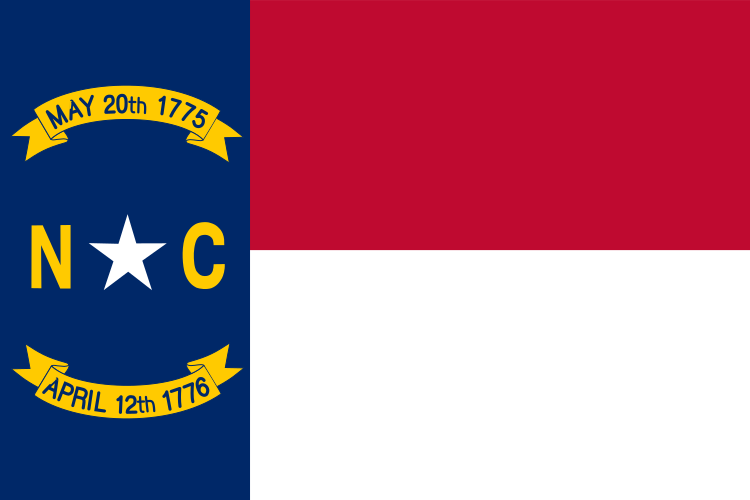 Blue Ridge ParkwayEst. 1936
North Carolina"America's Favorite Drive" — a 469-mile scenic parkway linking Shenandoah to the Great Smoky Mountains.
✶Great Smoky Mountains National Park63Est. 1934
North CarolinaThe most-visited national park, protecting one of the most biodiverse temperate forests on Earth.
✶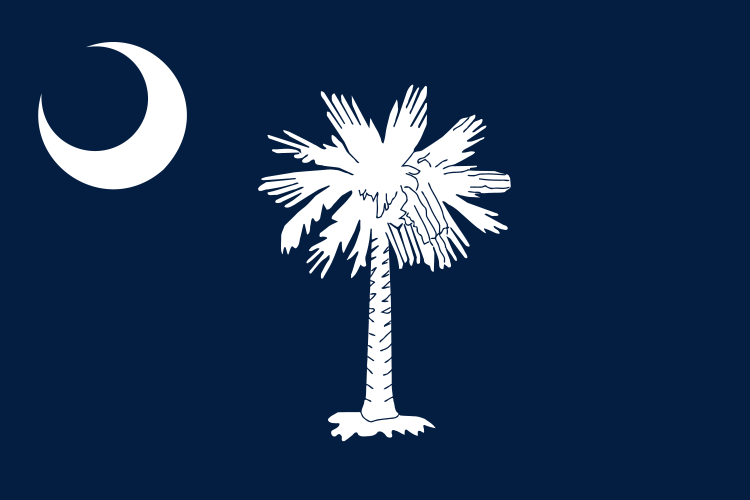 Congaree National Park63Est. 2003
South CarolinaProtects the largest intact tract of old-growth bottomland hardwood forest in the Southeast — some of the tallest trees in the East.
✶Cowpens National Battlefield250Est. 1929
Daniel Morgan's 1781 double-envelopment, a tactical masterpiece that shattered a British force in the Carolina backcountry.
✶Fort Sumter and Fort Moultrie National Historical Park250Est. 1948
South CarolinaWhere the first shots of the Civil War were fired in April 1861, in Charleston Harbor.
✶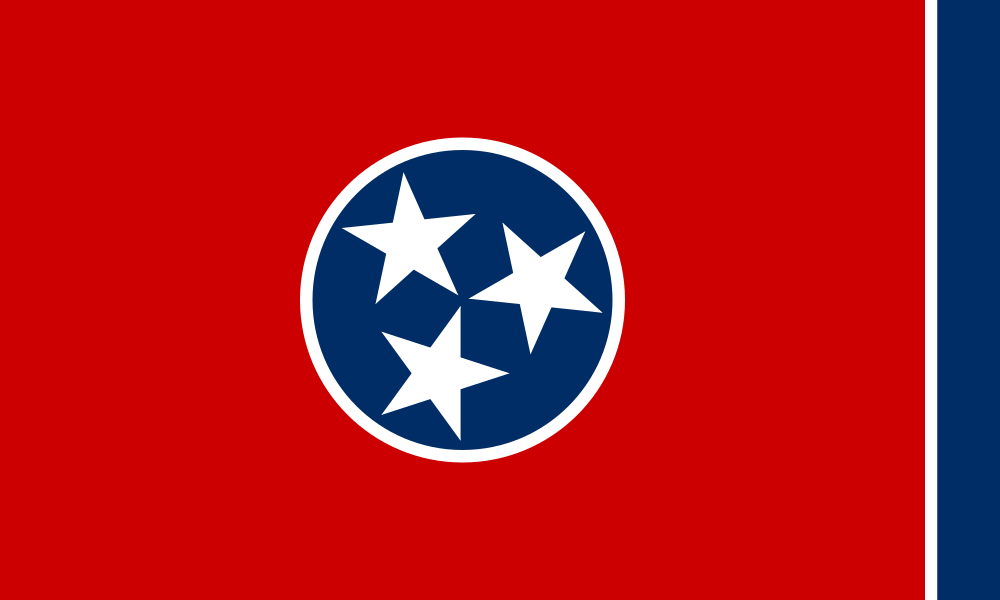 Stones River National BattlefieldEst. 1927
TennesseeOne of the Civil War's bloodiest battles by percentage; the hard-won Union victory lifted Northern morale at the close of 1862.
✉Guilford Courthouse National Military Park250Est. 1917stamp pending
The 1781 battle that bled Cornwallis's army so badly it set up the British surrender at Yorktown months later.
✉Charles Pinckney National Historic Site250Est. 1988stamp pending
Country home of a principal drafter and signer of the U.S. Constitution.
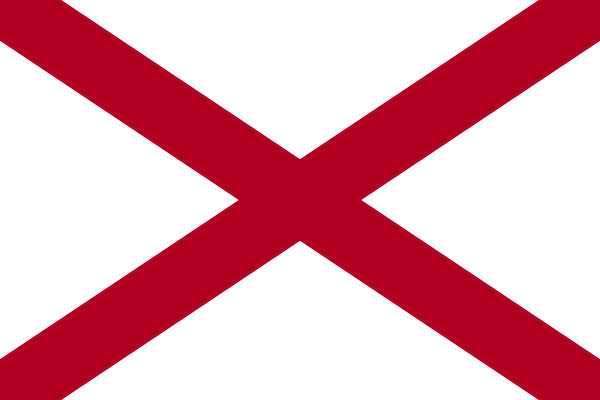 Birmingham Civil Rights NMFreedom Riders NMHorseshoe Bend NMPLittle River Canyon NPresRussell Cave NMSelma to Montgomery NHTTuskegee Airmen NHSTuskegee Institute NHS
 Big Cypress NPres
Biscayne NP63Est. 1980
FloridaA turquoise world of coral reefs, mangroves, and the northernmost Florida Keys — about 95% of the park is underwater.
Canaveral NSCastillo de San Marcos NM250De Soto N MEMDry Tortugas NP63Est. 1992
FloridaA cluster of remote islands 70 miles west of Key West, crowned by the vast 19th-century brick fortress of Fort Jefferson.
Everglades NP63Est. 1934
FloridaThe largest tropical wilderness in the U.S. — a slow-moving "river of grass" and the only place where alligators and crocodiles coexist.
Fort Caroline N MEMFort Matanzas NMTimucuan Ecological & Historic Preserve250Andersonville NHSChattahoochee River NRACumberland Island NSFort Frederica NMJimmy Carter NHPKennesaw Mountain NBPOcmulgee Mounds NHPCamp Nelson NMMill Springs Battlefield NMBrices Cross Roads NBSEmmett Till & Mamie Till-Mobley NMMedgar & Myrlie Evers Home NMNatchez NHPNatchez Trace ParkwayTupelo NBVicksburg NMPCape Hatteras NSCape Lookout NSCarl Sandburg Home NHSFort Raleigh NHSMoores Creek NB250Wright Brothers N MEMKings Mountain NMP250Ninety Six NHS250Reconstruction Era NHPAndrew Johnson NHSBig South Fork NRRAFort Donelson NBObed Wild & Scenic RiverShiloh NMP—Virgin Islands NP63Est. 1956
Covers most of St. John: white-sand beaches, coral reefs, and the ruins of colonial sugar plantations.
Midwest2 / 45
✶ Indiana Dunes National Park63Est. 1966
IndianaProtects rare dune-and-swale habitat along Lake Michigan — among the most botanically diverse of all the national parks.
✶ Cuyahoga Valley National Park63Est. 1974
OhioA reclaimed river valley between Cleveland and Akron — a story of nature's recovery from heavy industry.
✉ Pullman National MonumentEst. 2015stamp pending
The planned company town at the center of the 1894 Pullman Strike and the rise of the American labor movement.
Lincoln Home NHSNew Philadelphia NHSSpringfield 1908 Race Riot NMGeorge Rogers Clark NHP250Lincoln Boyhood N MEM Effigy Mounds NMHerbert Hoover NHS
 Brown v. Board of Education NHPFort Larned NHSFort Scott NHSNicodemus NHSTallgrass Prairie NPres
 Isle Royale NP63Est. 1940
MichiganA remote wilderness island in Lake Superior, famous for its long-studied wolves and moose — closed entirely each winter.
Keweenaw NHPPictured Rocks NLRiver Raisin NBPSleeping Bear Dunes NL Grand Portage NMMississippi National River & Rec AreaPipestone NMSaint Croix National Scenic Riverway
Voyageurs NP63Est. 1975
MinnesotaA watery maze of interconnected lakes on the Canadian border, best explored by boat and lit by the northern lights.
 Gateway Arch NP63Est. 2018
MissouriThe nation's smallest national park, framing Eero Saarinen's soaring stainless Gateway Arch — the "Gateway to the West."
George Washington Carver NMHarry S Truman NHSOzark National Scenic RiverwaysSte. Geneviève NHPUlysses S. Grant NHSWilson's Creek NB Agate Fossil Beds NMHomestead NHPMissouri National Recreational RiverNiobrara National Scenic RiverScotts Bluff NMCharles Young Buffalo Soldiers NMDayton Aviation Heritage NHPFirst Ladies NHSHopewell Culture NHPJames A. Garfield NHSPerry's Victory & Int'l Peace MemorialWilliam Howard Taft NHS
 Apostle Islands NL
Southwest6 / 44
✶ Jean Lafitte National Historical Park and PreserveEst. 1978
LouisianaBayous, a War of 1812 battlefield, and the living Cajun and Creole cultures of the Mississippi Delta.
✶New Orleans Jazz National Historical ParkEst. 1994
Celebrates the birthplace of jazz — America's original art form — in the streets where it was born.
✶ Carlsbad Caverns National Park63Est. 1930
New MexicoProtects one of the world's most spectacular cave systems, with a vast underground chamber and a nightly bat flight.
✶White Sands National Park63Est. 1933
New MexicoThe world's largest gypsum dune field — a surreal, ever-shifting sea of white sand.
✶ Chamizal National MemorialEst. 1966
TexasCommemorates the peaceful 1963 settlement of a century-long border dispute between the United States and Mexico.
✶Guadalupe Mountains National Park63Est. 1972
TexasProtects the world's most extensive Permian fossil reef and the highest peak in Texas.
 Arkansas Post N MEM250Buffalo National RiverFort Smith NHS
Hot Springs NP63Est. 1921
ArkansasThe oldest area in the park system, protecting thermal springs and a row of grand historic bathhouses since 1832.
Little Rock Central High School NHSPea Ridge NMPPresident Clinton Birthplace Home NHSCane River Creole NHPPoverty Point NMAztec Ruins NMBandelier NMCapulin Volcano NMChaco Culture NHPEl Malpais NMEl Morro NMFort Union NMGila Cliff Dwellings NMManhattan Project NHP (Los Alamos)Pecos NHPPetroglyph NMSalinas Pueblo Missions NMValles Caldera NPres Chickasaw NRAOklahoma City N MEMWashita Battlefield NHSAlibates Flint Quarries NMAmistad NRA
Big Bend NP63Est. 1944
TexasWhere the Rio Grande carves deep canyons through the Chihuahuan Desert and the Chisos Mountains rise from the wild Texas borderland.
Big Thicket NPresBlackwell School NHSFort Davis NHSLake Meredith NRALyndon B. Johnson NHPPadre Island NSPalo Alto Battlefield NHPRio Grande Wild & Scenic RiverSan Antonio Missions NHPWaco Mammoth NMRocky Mountain3 / 43
✶ Glen Canyon National Recreation AreaEst. 1972
ArizonaLake Powell and the red-rock canyons of the Colorado River, on the Utah–Arizona border.
✶ Rainbow Bridge National MonumentEst. 1910
UtahOne of the world's largest natural bridges, long held sacred by the Native peoples of the Colorado Plateau.
✶ Yellowstone National Park63Est. 1872
WyomingThe world's first national park, set aside in 1872 to protect its geysers, canyons, and wildlife — the idea that launched the entire national-park movement.
✉Grand Teton National Park63Est. 1929stamp pending
WyomingThe jagged Teton Range rising straight from the valley floor, just south of Yellowstone.
 Amache NHSBent's Old Fort NHS
Black Canyon of the Gunnison NP63Est. 1999
ColoradoA sheer, dizzyingly narrow gorge so deep and steep that parts of its floor get only minutes of sunlight a day.
Colorado NMCurecanti NRADinosaur NMFlorissant Fossil Beds NMGreat Sand Dunes NP & Preserve63Est. 2004
ColoradoThe tallest sand dunes in North America, piled against the Sangre de Cristo Mountains beside a seasonal creek.
Hovenweep NMMesa Verde NP63Est. 1906
ColoradoPreserves the cliff dwellings of the Ancestral Puebloans — the first national park set aside to protect works of humankind.
Rocky Mountain NP63Est. 1915
ColoradoA high-country of alpine tundra, glacial lakes, and peaks above 14,000 feet, crossed by the highest continuous paved road in the U.S.
Sand Creek Massacre NHSYucca House NM Big Hole NBBighorn Canyon NRA
Glacier NP63Est. 1910
MontanaThe "Crown of the Continent" — carved valleys, turquoise lakes, and the cliff-hugging Going-to-the-Sun Road.
Grant-Kohrs Ranch NHSLittle Bighorn Battlefield NM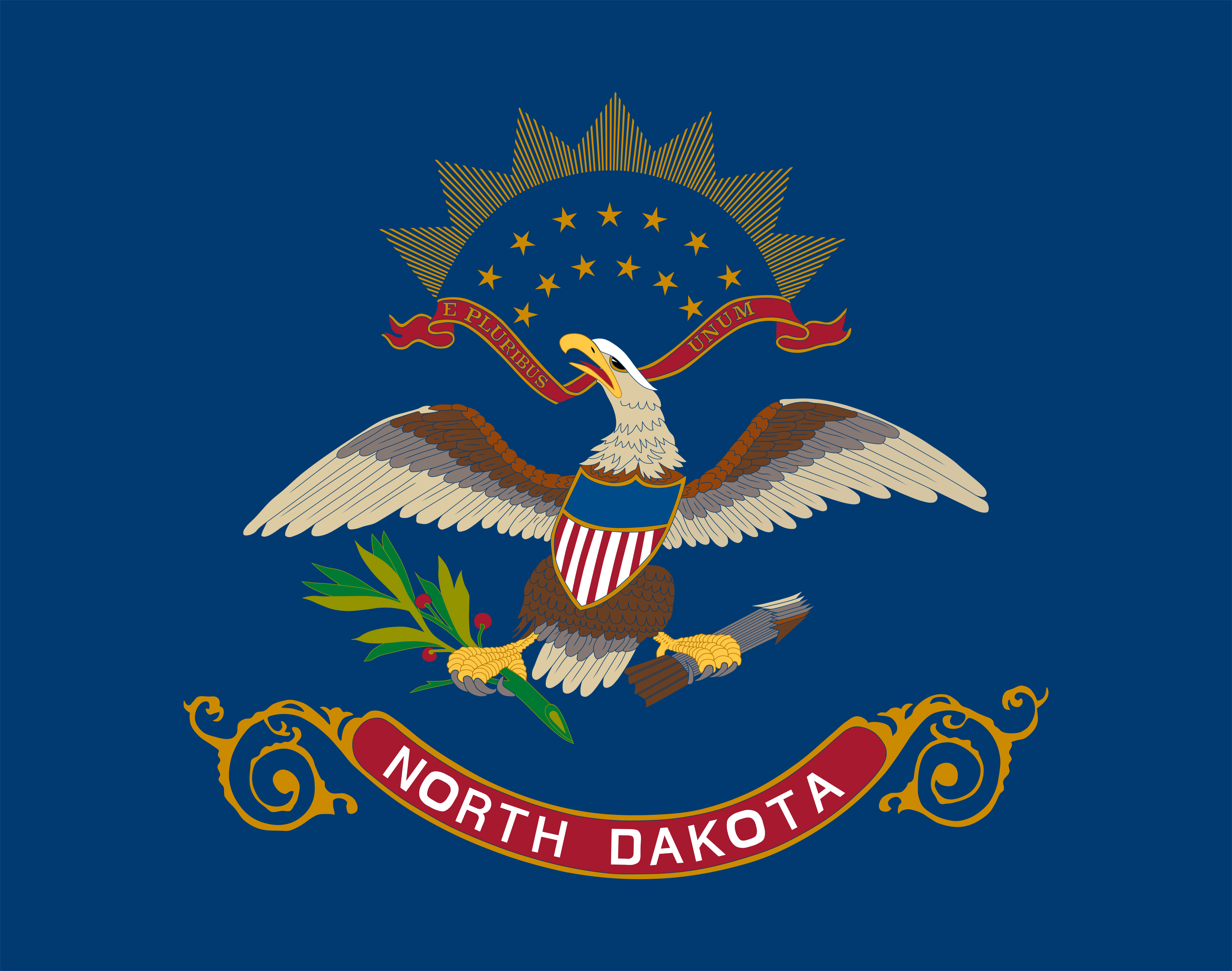 Fort Union Trading Post NHSKnife River Indian Villages NHS
Theodore Roosevelt NP63Est. 1978
The badlands that shaped Roosevelt the conservationist — the only national park named for a single person.
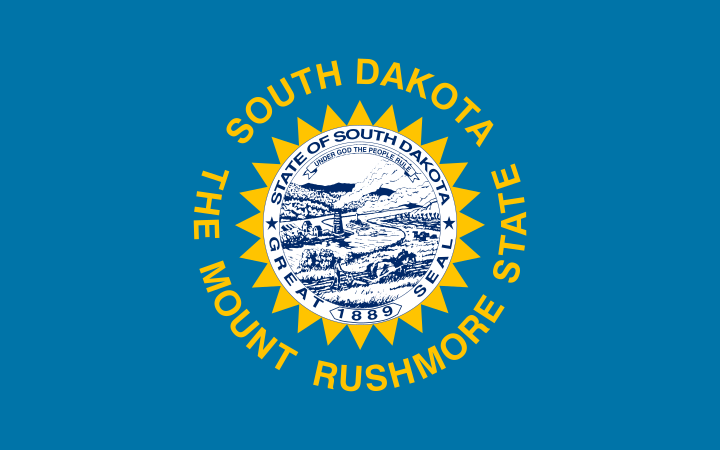 Badlands NP63Est. 1978
South DakotaEroded spires and striped buttes over an ancient fossil bed, ringed by one of the largest mixed-grass prairies left.
Jewel Cave NMMinuteman Missile NHSMount Rushmore N MEMWind Cave NP63Est. 1903
South DakotaOne of the world's longest and most complex caves, famous for its delicate honeycomb "boxwork," beneath a prairie of bison and elk.
Arches NP63Est. 1971
UtahThe greatest concentration of natural stone arches on Earth — more than 2,000, including the iconic Delicate Arch.
Bryce Canyon NP63Est. 1928
UtahNot a canyon but a vast amphitheater of red-orange rock spires called hoodoos, the largest such collection anywhere.
Canyonlands NP63Est. 1964
UtahA rugged wilderness of mesas, buttes, and canyons carved by the Colorado and Green Rivers into four remote districts.
Capitol Reef NP63Est. 1971
UtahBuilt around the Waterpocket Fold, a 100-mile wrinkle in the Earth's crust, dotted with historic orchards and petroglyphs.
Cedar Breaks NMGolden Spike NHPNatural Bridges NMTimpanogos Cave NMZion NP63Est. 1919
UtahTowering sandstone cliffs and the narrow slot of the Virgin River — Utah's first national park and one of its most beloved.
Devils Tower NMFort Laramie NHSFossil Butte NMJohn D. Rockefeller, Jr. Memorial PkwyWestern13 / 61
✶Grand Canyon National Park63Est. 1919
A mile-deep record of two billion years of Earth's history; Roosevelt fought to protect it, urging Americans to "leave it as it is."
✶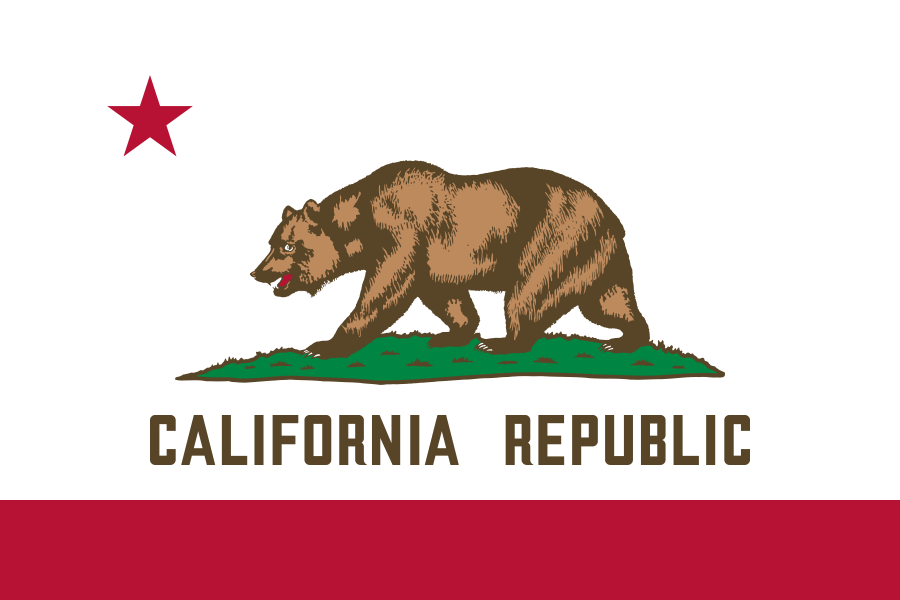 Death Valley National Park63Est. 1994
CaliforniaThe hottest, driest, and lowest place in North America.
✶Fort Point National Historic SiteEst. 1970
CaliforniaA brick Civil War fort tucked beneath the Golden Gate Bridge, guarding San Francisco Bay.
✶Golden Gate National Recreation AreaEst. 1972
CaliforniaOne of the largest urban parks in the world — from Alcatraz to the Marin Headlands around San Francisco Bay.
✶Joshua Tree National Park63Est. 1994
CaliforniaWhere two deserts meet, protecting the iconic Joshua trees and their fragile ecosystems.
✶Kings Canyon National Park63Est. 1940
Guards giant sequoia groves and one of the deepest canyons in North America.
✶Lassen Volcanic National Park63Est. 1916
CaliforniaPreserves a still-active volcanic landscape where all four types of volcano in the world can be found in one park.
✶Manzanar National Historic SiteEst. 1992
CaliforniaThe WWII camp where Japanese Americans were unjustly incarcerated — preserved so the injustice is never forgotten.
✶Muir Woods National MonumentEst. 1908
An old-growth coast redwood grove named for John Muir, saved from logging just north of San Francisco.
✶Redwood National and State Parks63Est. 1968
CaliforniaProtects the tallest trees on Earth — the last great stands of old-growth coast redwoods.
✶Santa Monica Mountains National Recreation AreaEst. 1978
CaliforniaThe largest urban national park, protecting Mediterranean-climate wilderness right beside Los Angeles.
✶Sequoia National Park63Est. 1890
The nation's second national park, home to the giant sequoias — the largest living trees on Earth by volume.
✶Yosemite National Park63Est. 1890
Its granite cliffs and giant sequoias inspired John Muir's crusade for wilderness and helped shape the very idea of a national park.
Canyon de Chelly NMCasa Grande Ruins NMChiricahua NMCoronado N MEMFort Bowie NHSGrand Canyon-Parashant NMHubbell Trading Post NHSMontezuma Castle NMNavajo NMOrgan Pipe Cactus NMPetrified Forest NP63Est. 1962
ArizonaFields of rainbow-hued fossilized wood and the colorful badlands of the Painted Desert, along old Route 66.
Pipe Spring NMSaguaro NP63Est. 1994
ArizonaGuards dense forests of the giant saguaro cactus — the symbol of the American West — on two sides of Tucson.
Sunset Crater Volcano NMTonto NMTumacácori NHPTuzigoot NMWalnut Canyon NMWupatki NM—National Park of American Samoa63Est. 1988
The only U.S. national park south of the equator — rainforest, coral reefs, and Samoan villages across three remote islands.
Cabrillo NMCastle Mountains NMChannel Islands NP63Est. 1980
CaliforniaFive wild, undeveloped islands off the California coast, home to species found nowhere else — a "Galápagos of North America."
César E. Chávez NMDevils Postpile NMEugene O'Neill NHSJohn Muir NHSLava Beds NMMojave NPresPinnacles NP63Est. 2013
CaliforniaCraggy spires left by an ancient volcano, talus caves, and one of the best places to see the endangered California condor.
Point Reyes NSPort Chicago Naval Magazine N MEMRosie the Riveter WWII Home Front NHPSan Francisco Maritime NHPTule Lake NMWhiskeytown NRA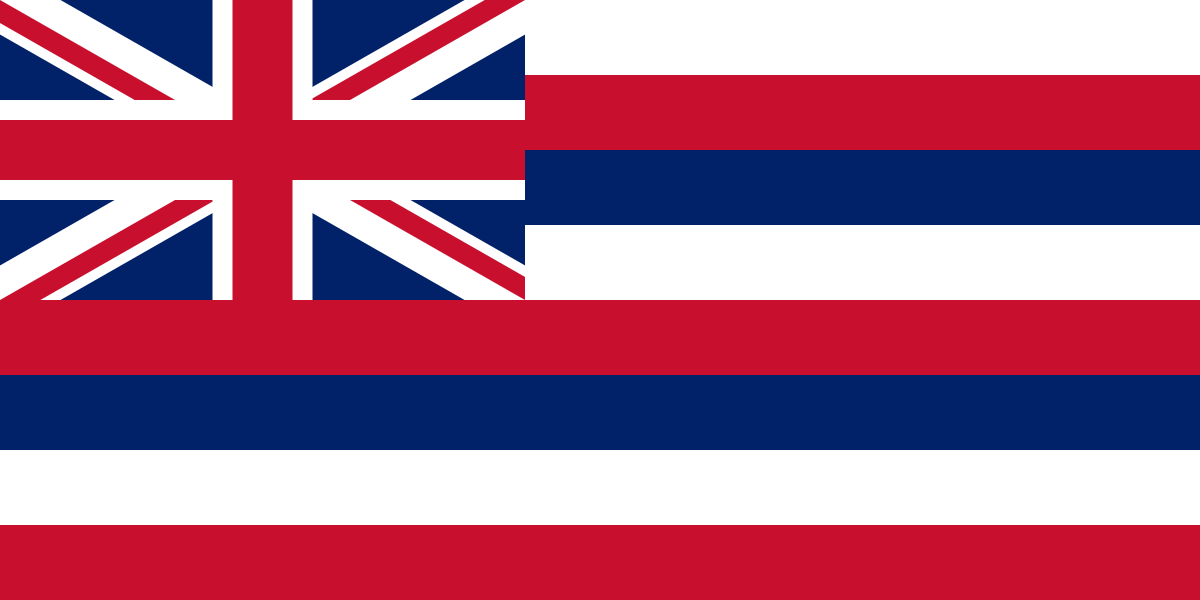 Haleakalā NP63Est. 1961
HawaiiA vast, otherworldly volcanic summit on Maui, prized for its sunrises and its rare silversword plants.
Hawaiʻi Volcanoes NP63Est. 1916
HawaiiHome to two of the world's most active volcanoes, Kīlauea and Mauna Loa, where new land is still being born.
Honouliuli NHSKalaupapa NHPKaloko-Honokōhau NHPPearl Harbor N MEMPuʻuhonua o Hōnaunau NHPPuʻukoholā Heiau NHS Great Basin NP63Est. 1986
NevadaAncient bristlecone pines, the marble Lehman Caves, and some of the darkest night skies in the country beneath Wheeler Peak.
Lake Mead NRATule Springs Fossil Beds NMPacific Northwest & Alaska6 / 37
✶ Denali National Park and Preserve63Est. 1917
AlaskaGuards North America's tallest peak and a vast subarctic wilderness of grizzlies, caribou, and wolves.
✶Gates of the Arctic National Park and Preserve63Est. 1980
AlaskaThe northernmost national park — an untouched Arctic wilderness with no roads and no trails at all.
✶Kenai Fjords National Park63Est. 1980
AlaskaWhere the Harding Icefield spills glaciers into the sea, amid whales, puffins, and sea otters.
✶Yukon-Charley Rivers National PreserveEst. 1980
AlaskaProtects the Yukon River corridor and Gold Rush history deep in Alaska's interior.
✶ Crater Lake National Park63Est. 1902
OregonProtects the deepest lake in the United States, cradled in the collapsed caldera of an ancient volcano, Mount Mazama.
✶ Olympic National Park63Est. 1938
Protects temperate rainforest, glaciated peaks, and wild Pacific coast; FDR pushed to enlarge and protect it.
Alagnak Wild RiverAniakchak NM & PreserveBering Land Bridge NPresCape Krusenstern NMGlacier Bay NP & Preserve63Est. 1980
AlaskaA dramatic fjordland where tidewater glaciers calve into the sea, only recently uncovered from a Little Ice Age advance.
Katmai NP & Preserve63Est. 1980
AlaskaFamous for its brown bears fishing the falls at Brooks Camp, and the ash-filled Valley of Ten Thousand Smokes.
Klondike Gold Rush NHP (Skagway)Kobuk Valley NP63Est. 1980
AlaskaOne of the least-visited parks — Arctic sand dunes and a caribou migration that has crossed the Kobuk River for millennia.
Lake Clark NP & Preserve63Est. 1980
AlaskaVolcanoes, turquoise lakes, and salmon runs in a roadless Alaskan wilderness reached only by small plane or boat.
Noatak NPresSitka NHPWrangell-St. Elias NP & Preserve63Est. 1980
AlaskaThe largest national park in the country — bigger than Switzerland — a realm of giant peaks, glaciers, and the Kennecott copper mines.
 City of Rocks NResCraters of the Moon NM & PreserveHagerman Fossil Beds NMMinidoka NHSNez Perce NHP
Lewis and Clark National Historic TrailEst. 1978
MissouriFollows the 3,700-mile route of the Corps of Discovery from the Mississippi to the Pacific and back.
John Day Fossil Beds NMOregon Caves NM & PreserveEbey's Landing National Historical ReserveFort Vancouver NHSKlondike Gold Rush NHP (Seattle)Lake Chelan NRALake Roosevelt NRAManhattan Project NHP (Hanford)Mount Rainier NP63Est. 1899
WashingtonAn enormous glaciated volcano wrapped in wildflower meadows — the fifth national park and the centerpiece of the Cascades.
North Cascades NP63Est. 1968
WashingtonA rugged "American Alps" of jagged peaks and more than 300 glaciers — among the wildest and least-traveled parks in the lower 48.
Ross Lake NRASan Juan Island NHPWhitman Mission NHSNational Trails & Multi-State11 / 20
✶US Civil Rights Trail
AlabamaLinks the churches, schools, and streets across the South where the civil-rights movement was fought and won.
✶New England National Scenic TrailEst. 2009
ConnecticutA 215-mile ridgeline trail over the traprock hills of Connecticut and Massachusetts.
✶Trail of Tears National Historic TrailEst. 1987
GeorgiaRetraces the forced removal of the Cherokee and other Southeastern nations to Indian Territory in the 1830s.
✶Appalachian National Scenic TrailEst. 1968
MaineThe 2,190-mile footpath along the Appalachian crest from Georgia to Maine.
✶Underground Railroad Network to Freedom
MarylandA national program connecting the sites and stories of those who escaped slavery — and those who risked everything to help them.
✶Lewis and Clark National Historic TrailEst. 1978
MissouriFollows the 3,700-mile route of the Corps of Discovery from the Mississippi to the Pacific and back.
✶El Camino Real de Tierra Adentro National Historic TrailEst. 2000
New MexicoThe 1,600-mile "Royal Road" that linked Mexico City to Santa Fe for more than two centuries.
✶Captain John Smith Chesapeake National Historic TrailEst. 2006
VirginiaA water trail tracing Smith's 1607–09 voyages mapping the Chesapeake Bay.
✶Potomac Heritage National Scenic Trail
VirginiaA developing network of trails along the Potomac corridor, from the Chesapeake Bay to the Allegheny Highlands.
✶United States Colored Troops Historic Trail
VirginiaTraces the service of the roughly 200,000 Black soldiers and sailors who fought for the Union and for their own freedom.
✶Washington-Rochambeau Revolutionary Route National Historic Trail250Est. 2009
VirginiaThe 680-mile route American and French armies marched to the decisive victory at Yorktown in 1781.
American Revolution 250 · beyond the parks4 / 10
The Freedom Trail250Museum of the American Revolution250George Washington's Mount Vernon250Thomas Jefferson's Monticello250Touro Synagogue250saw it · no stampNathan Hale Homestead250Boston Tea Party Ships & Museum250Fraunces Tavern Museum250James Madison's Montpelier250Passports the books I collect in
- Passport To Your National Parks
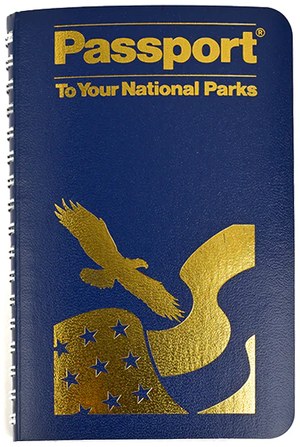 Passport To Your National Parks — Eastern National
The original national park passport — the one I started with.
- 63 National Park Adventure Guide
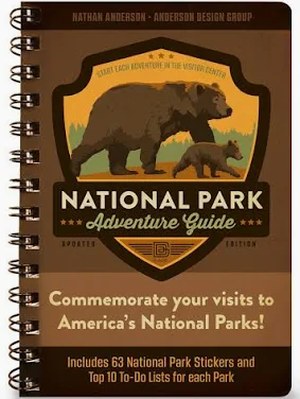 63 National Park Adventure Guide — Anderson Design Group
A guided version covering all 63 parks, with highlights and “what to do” adventure suggestions for each, plus stickers. I bought it for the information and the beautiful pictures.
- Passport To Your National Parks: American Revolution 250th Special Edition
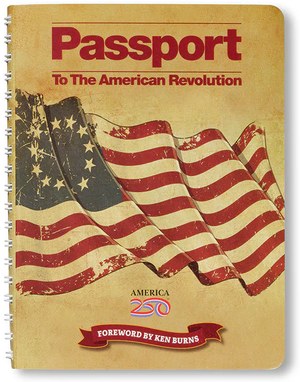 Passport To Your National Parks: American Revolution 250th Special Edition — America's National Parks
A 250th-anniversary special edition I found in March 2026 — it kicked off a whole historical learning journey. It's genuinely educational: you can learn each site's highlights just by reading, then go deeper by visiting them.
As an Amazon Associate, I earn from qualifying purchases.