Books
On the Word "Amend"
Somewhere along the northeast leg of this trip, I've had We the People: A History of the U.S. Constitution by Jill Lepore playing in my ears — the audiobook version, mile after mile. It opens with the Preamble, then works backward into the Declaration of Independence, the drafting of the Constitution, and the long, uneven history of trying to change it.
One detail from the book has stayed with me. In English, amend traces back to the twelfth century, built on Latin and French roots meaning to correct a fault or repair what's broken. It's practically a sibling word to mend — they share almost all their letters and nearly all their meaning. To amend something is, at its root, just to mend it.
That small etymology cracked open a bigger thought for me: amendment is a culture, not just a clause.
A Country Built to Be Edited
The Founders knew they weren't perfect, and they knew the document they were writing wouldn't be either. So they built in a mechanism — Article V — for the country to keep repairing itself. No law, no constitution, no rule can stay fit forever, because the situation underneath it keeps changing. What works today won't necessarily work in fifty years. And history, as it's often said, is written by the winners — so whatever gets carried forward as "settled" usually erases some other side's version of events. Amendment is the release valve for that: a formal way to say we got something wrong, or something outgrew its shape, so we change it — without having to burn the whole structure down to do it.
That's the American instinct, as I understand it now. You adjust the tool you have instead of throwing it out. Ignore the parts that are old-fashioned or no longer fit, and build the update directly into the existing frame.
But I don't want to set that up as amendment versus revolution, as if one replaced the other. Speaking up, dissenting, even revolution itself — that's a power of this country too, protected as a right going back to the Declaration of Independence's claim that people can alter or abolish a government that no longer serves them. Amendment is the quieter, built-in version of that same right: the country doesn't need to reach for revolution every time, because it already has a formal channel for the same instinct. The country's power isn't in being unchangeable, and it isn't only in being willing to be edited — it's in holding both options, the loud one and the quiet one, at once.
Kaizen, By Comparison
Before this trip, if you'd asked me where "continuous improvement" as a cultural idea came from, I'd have said Japan — kaizen, the Toyota Way. And it is a real and powerful philosophy: improve based on what's not working, refine step by step, get a little better every day.
But listening to this book, I started to notice the difference in shape. Kaizen tends to keep the existing frame intact and make small corrections inside it — tightening one bolt at a time, staying loyal to the foundation even as the world around it shifts. It's very good at solving the small problem in front of you. But it can mean tending to a single tree so carefully that you lose sight of whether the forest itself still makes sense.
Amendment, at least as this book frames it, is willing to touch the foundation. Not tear it down — but actually revise the frame, not just the details living inside it.
Where I've Landed
I don't think one approach is simply better than the other — they're solving for different things. But this trip, with this book in my ears, gave me a new lens for a word I'd never really stopped to define: amend. Not just a legal term. A whole philosophy of staying alive as a country — mending yourself, piece by piece, rather than either freezing in place or blowing everything up to start over.
Books & media
- We the People: A History of the U.S. Constitution
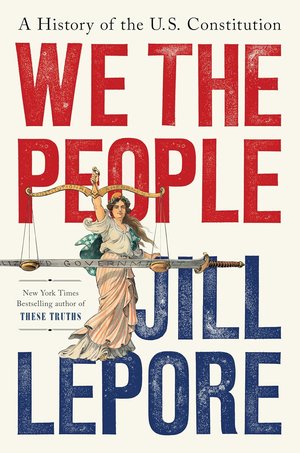 We the People: A History of the U.S. Constitution — Jill Lepore · Buy on Amazon
As an Amazon Associate, I earn from qualifying purchases.